

The room changes after the last tool has been cleaned. An open container closes, something is set down to dry, and the worktable begins showing patches of its own surface again. The object in progress may be no nearer completion, but the actions around it have acquired an ending.
It can be difficult to recognize when a decision has stopped becoming clearer. The work is close enough to invite another attempt, and leaving it means accepting that a question will remain open. A practical sign is repetition without a new test. The same alternatives are compared under the same conditions, while the reason for preferring either becomes less easy to name.
At that point, continuing may produce more versions without giving the edit more information. A different position, another pair of eyes, or a change in light might be needed. Those conditions cannot always be summoned at the end of the day. Writing down what would make the next comparison useful turns an indefinite wish to keep working into a question that can wait for an answer.
What distance can change
Putting tools away can support that return. Cleaning a brush or gathering a set of samples gives the body a sequence with a definite end, separate from the uncertain status of the project. The unfinished work can stay visible while the equipment stops inviting another immediate attempt. The room remains a place of making, with its active part closed for the evening.
Outside the room, other scales become available. A close detail loses some of the importance it acquired after hours of looking. An awkward sentence may become easier to hear when its neighbors are no longer in view. These changes do not guarantee a better answer. They make it possible to encounter the same problem in a state of attention that has not spent the whole afternoon defending one approach.
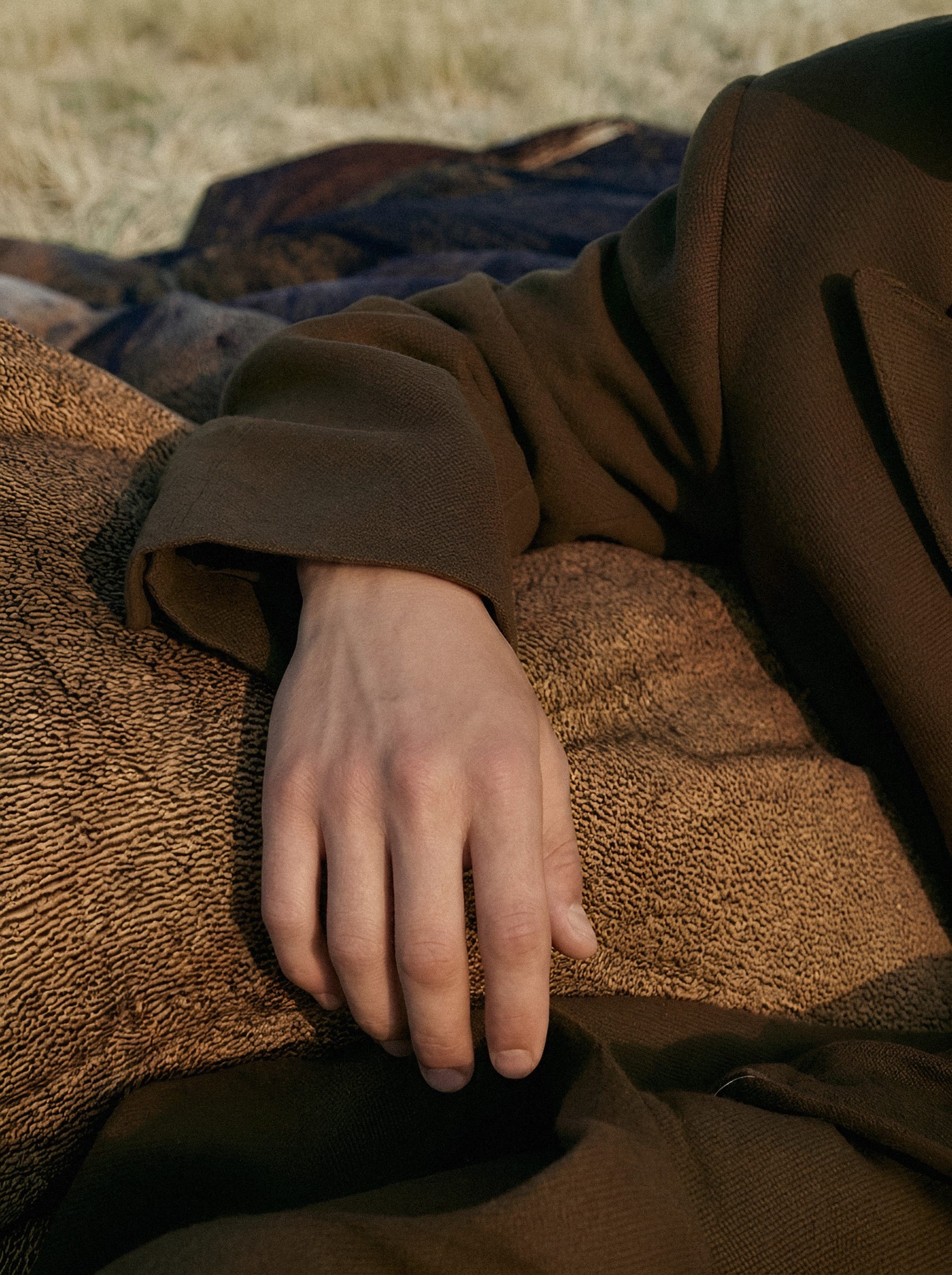


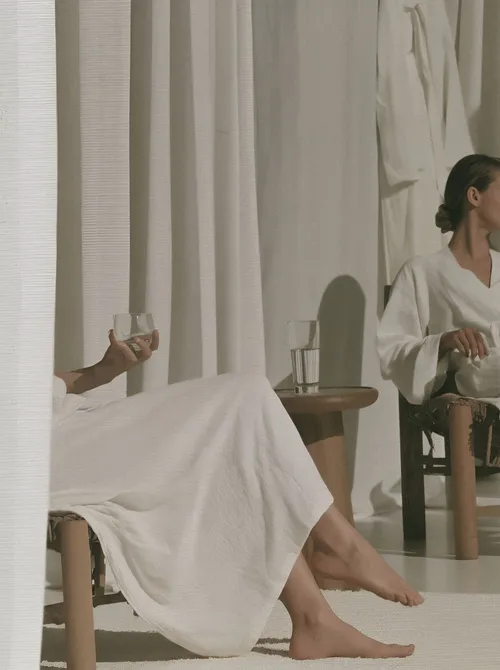
A body settles into the available ground.
There is also information in what continues to return to mind after leaving. One detail may remain troublesome while the rest of the project becomes less urgent. Another may lose its significance altogether. A brief note made away from the table can preserve that distinction without requiring a return to the full session. The next day need not begin by treating every unresolved part as equally important.
A place to return
A short note beside it can identify the first action. Compare the two samples in daylight. Read the middle section before changing the opening. Check whether the mark still matters after standing farther away. The note makes a small promise that can be kept without pretending to know how the whole project will end. Tomorrow has a starting point rather than a general demand for more effort.
When the door closes, the question on the table remains unanswered. The samples are separated, the tools have been cared for, and enough has been written down to recognize where the work stopped. In the morning the room will receive another kind of light. The first comparison can wait until then.






Comments