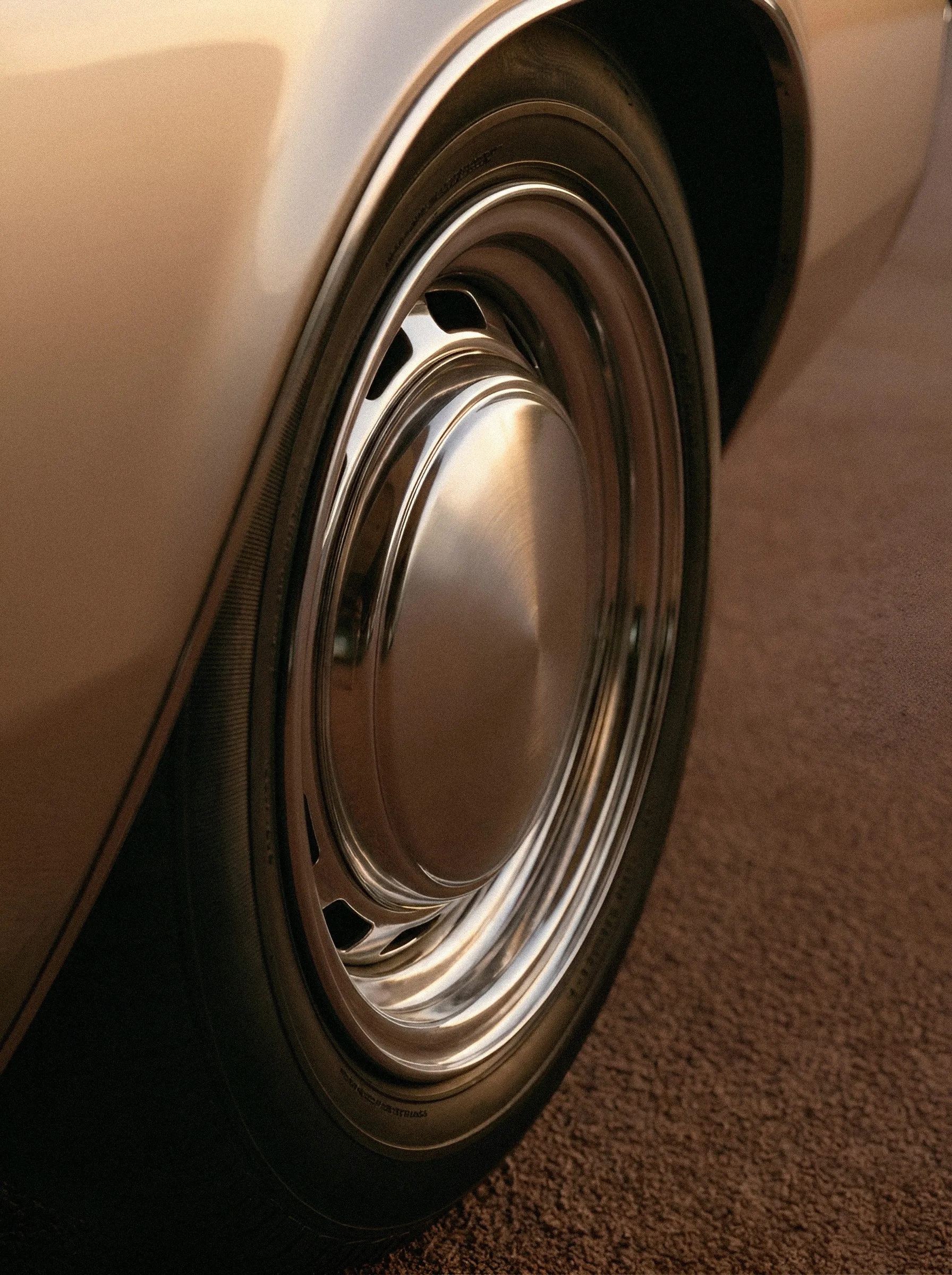
A wheel catches the light before the rest of the car comes into view. The curved metal holds a softened reflection, while the rubber beside it remains almost black. Something made to move is briefly still enough for its surfaces to be considered separately.
Useful objects become familiar through small movements. A hand finds a handle without looking. A door closes with a weight the body already expects. These encounters rarely ask for attention, yet they shape how an object feels long before its appearance can be described. Design enters the day through the gestures it makes possible.
Seen closely, the car offers a sequence of edges rather than a single outline. A rim follows a tire. A lamp meets a band of polished trim. A narrow seam divides two painted surfaces. Each boundary has a practical part to play, while the light gives it another presence. Function becomes visible without needing to announce itself.
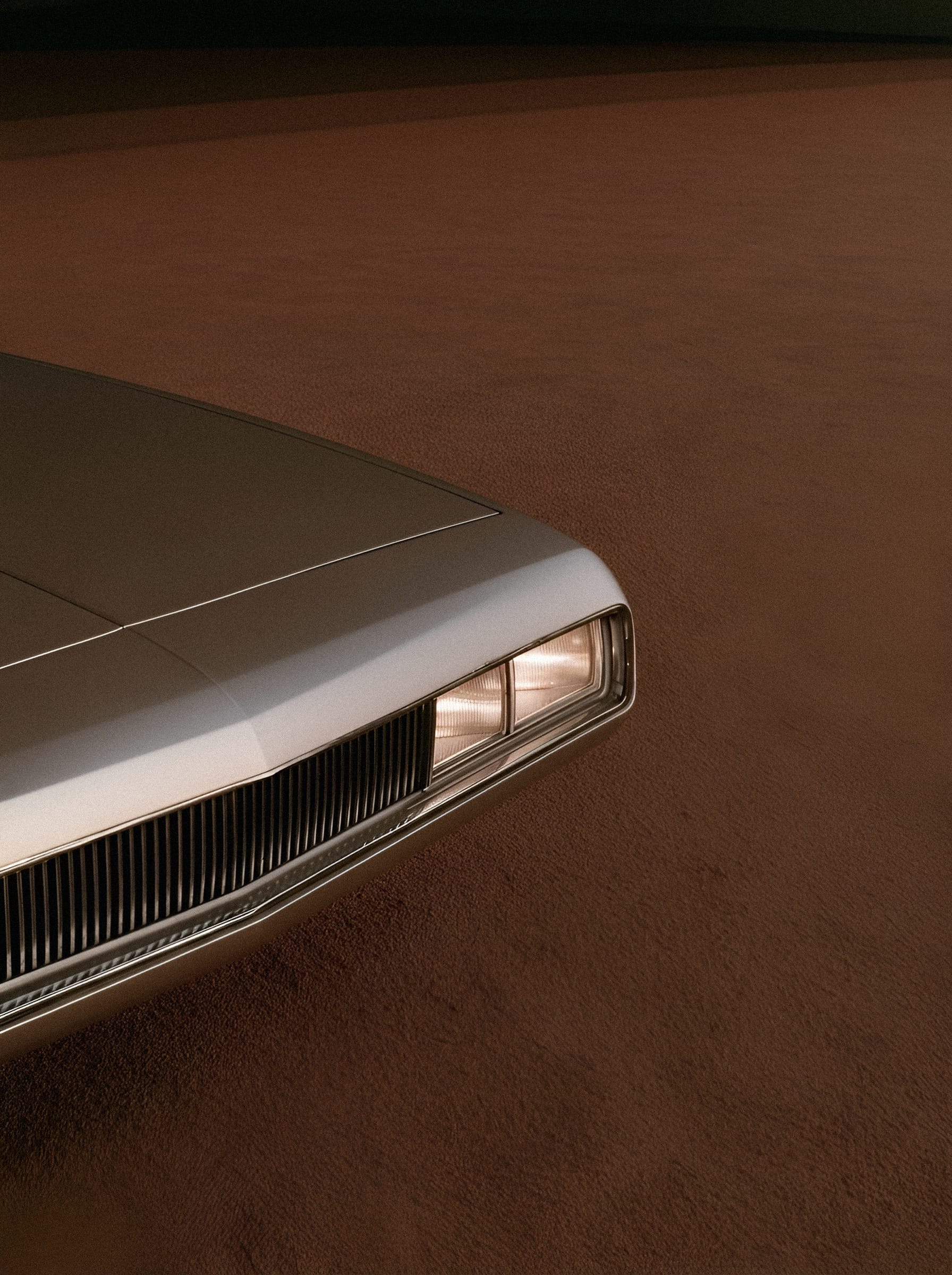
The photographs stay near these meeting points. A broad panel allows a fine line to become noticeable; a dark opening makes the metal around it seem lighter. The details share a material language, but they do different work. Some protect an edge, some frame an opening, and some make one surface easier to read beside another. Their usefulness and appearance are difficult to separate.
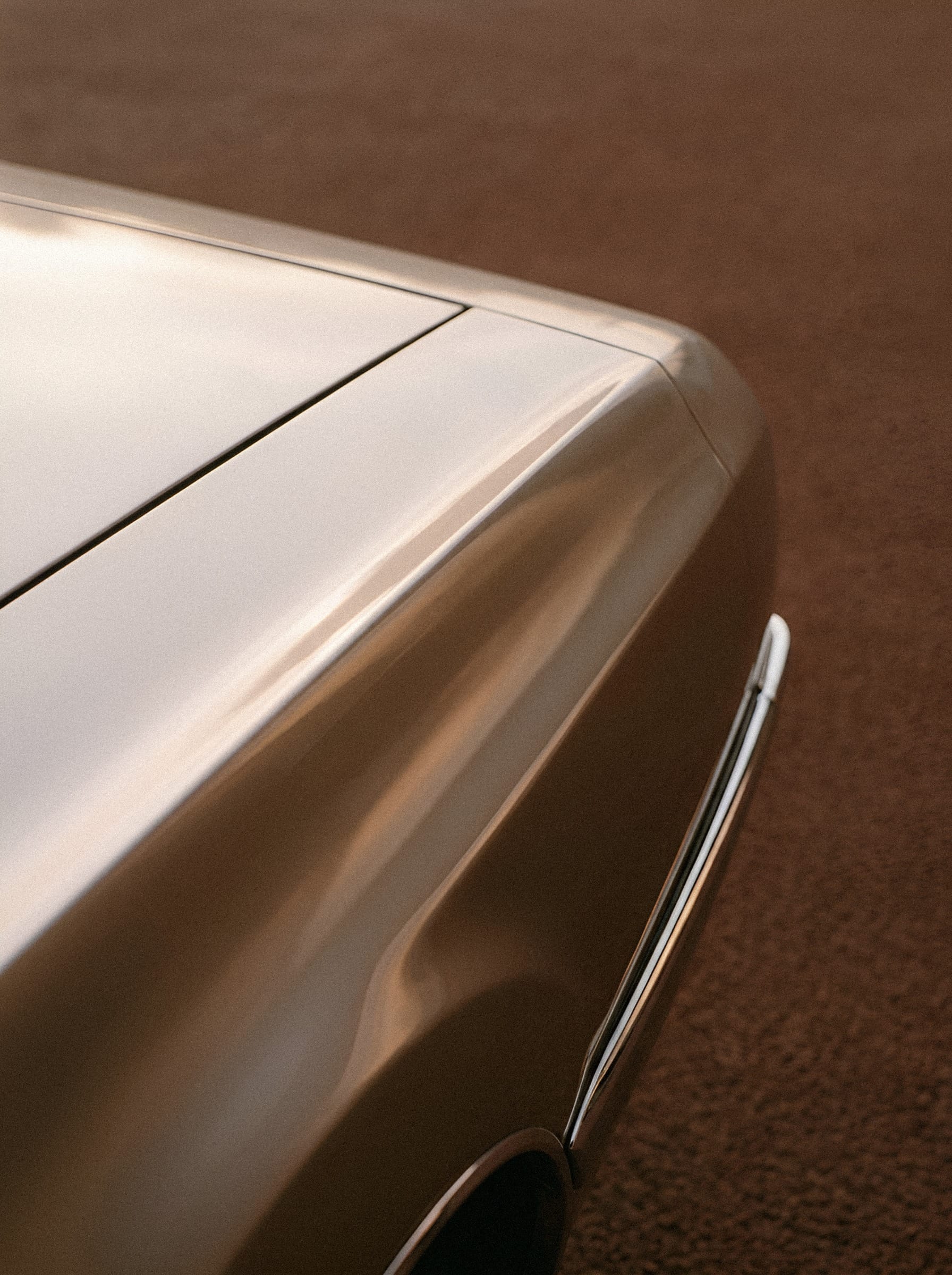
An object earns its place through repeated encounters like these. Its proportions become familiar, its weight predictable, its points of contact easy to find. The eye may return to a reflection or a clean curve, but the longer relationship belongs to use. A quiet purpose can remain present even when nobody is looking closely enough to name it.







Comments