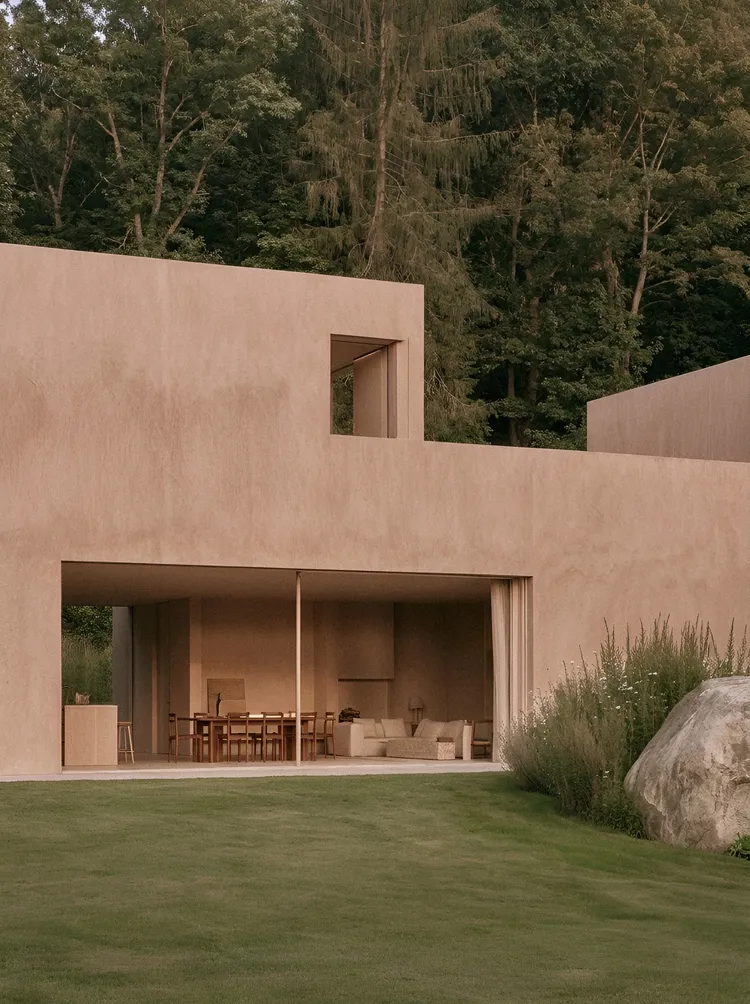
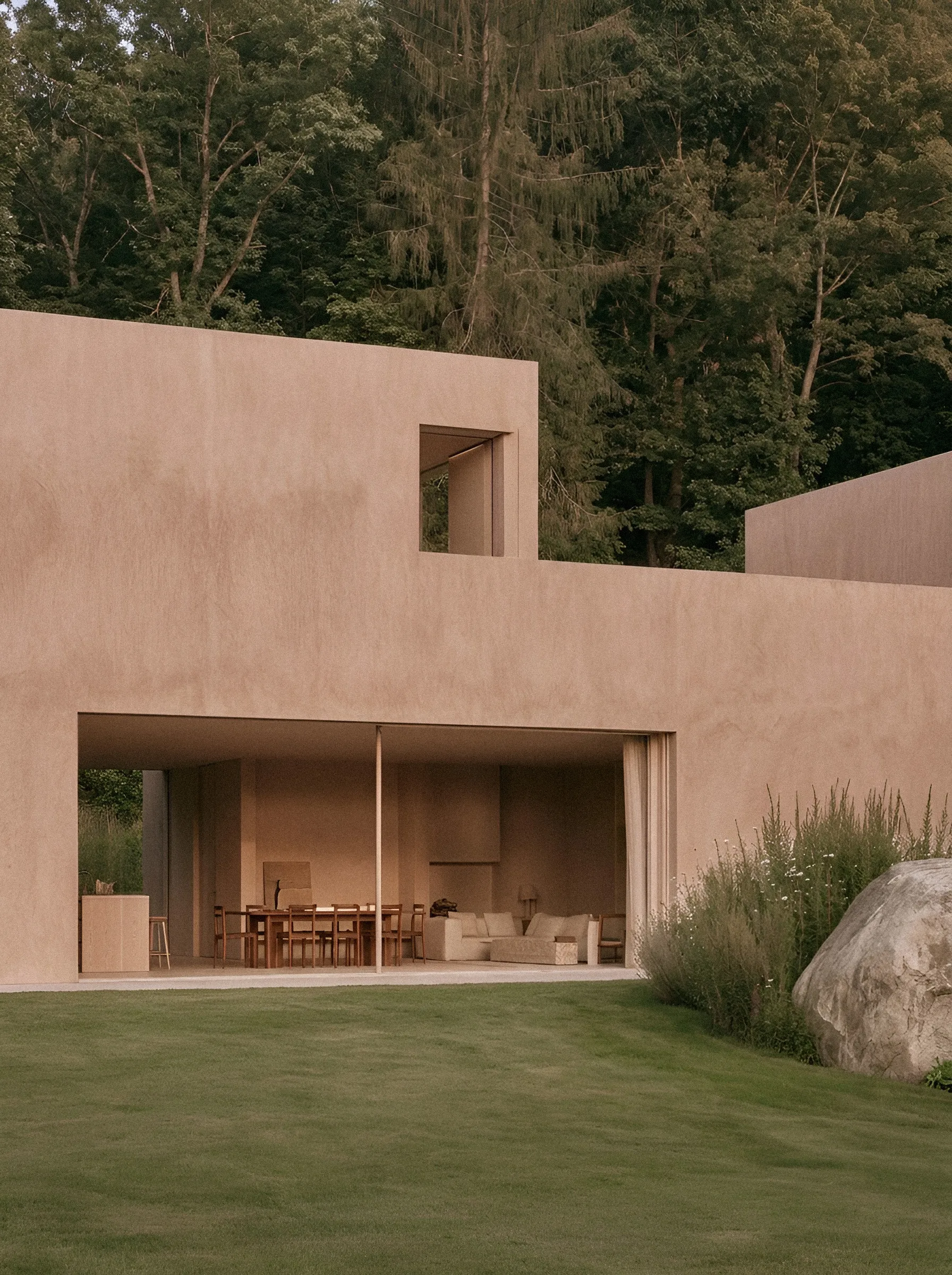
At the edge of a clearing, a low pink wall interrupts the trees. A recessed opening holds more shadow than the surface around it. Before the whole building becomes a recognizable shape, these smaller relationships offer somewhere for the eye to pause.
A visit planned around architecture tends to collect complete views. Reach the building, recognize its form, make the picture, move on. The intervals can become an inconvenience between the things worth seeing. Giving one of them a little time changes the journey’s scale. A doorway, a strip of shelter, or the meeting of grass and wall begins to matter on its own.
Waiting makes differences visible that a quick passage would flatten. A shadow reaches another part of a wall. Leaves move behind an opening, and the sun separates one plane from another. A useful photograph may come from this changing arrangement rather than the view that first caused the photographer to stop.
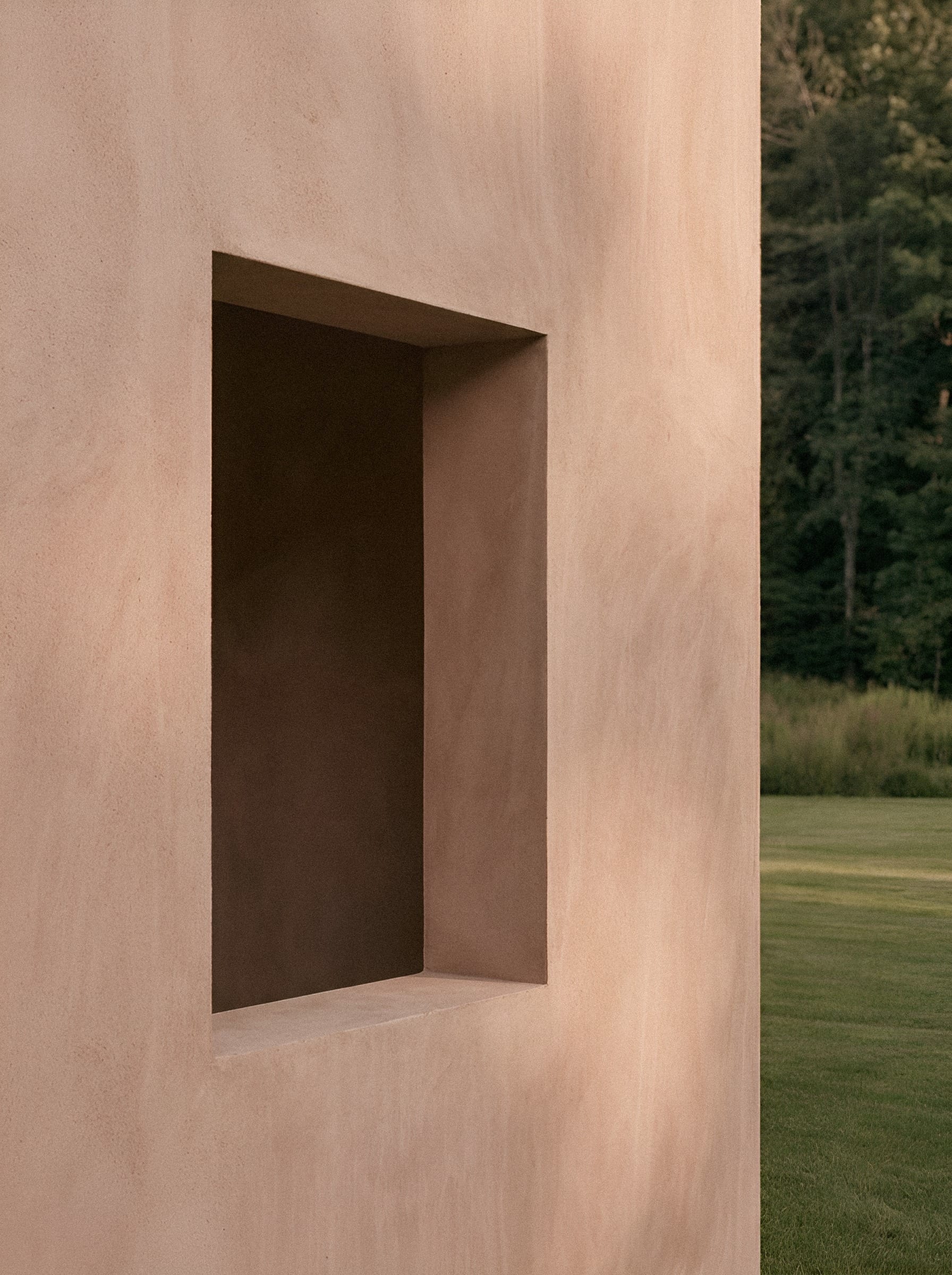
Staying at the corner
The frame still has limits. It can describe a surface and a moment of light, while leaving much of the place unexplained. A person passing through should be cautious about turning a brief encounter into a complete account of a building or the lives within it. Attention becomes more generous when it can notice without claiming to have understood everything it sees.
That restraint can improve the pictures too. An image does not have to represent an entire building to hold a particular relationship clearly. A boulder near a large wall can describe distance. A repeated color can connect two otherwise separate parts of a garden. The smaller claim leaves more room for the detail to remain specific.
Returning along the same path introduces a second sequence. The sun comes from another direction, a recess is encountered before its opening, and the corner used as a viewing position becomes something approached from below. A familiar route begins offering more than one way to recognize it.
Another way back
Photographs made on these passages may seem minor beside the images of the building itself. Their usefulness can appear later, when a small detail brings back the pace of the walk more readily than a complete view. The place returns as a set of distances between things, with enough space in them to remember moving.
Eventually the patch of shade has moved. The viewing position is available again, though its light has changed.
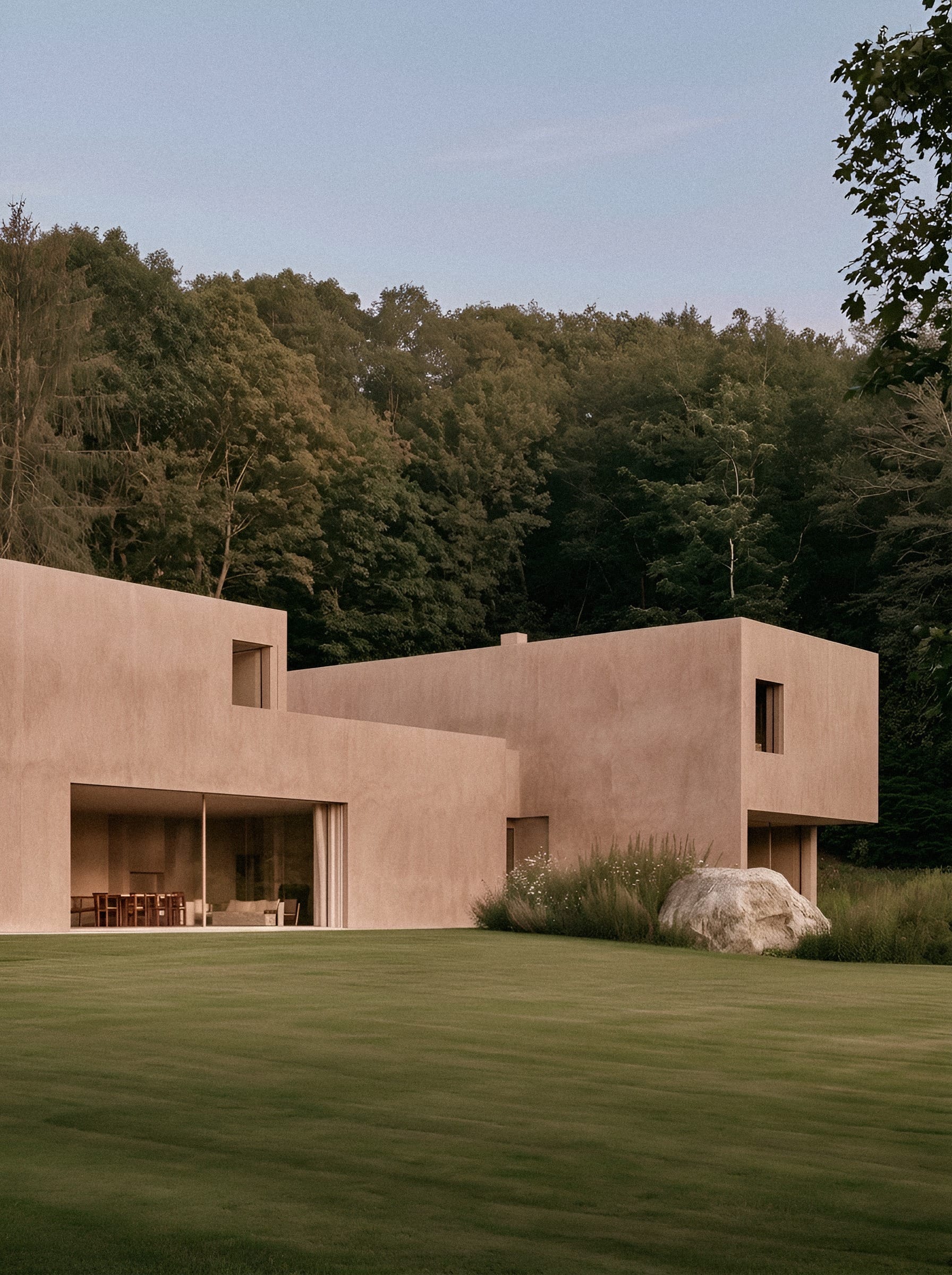
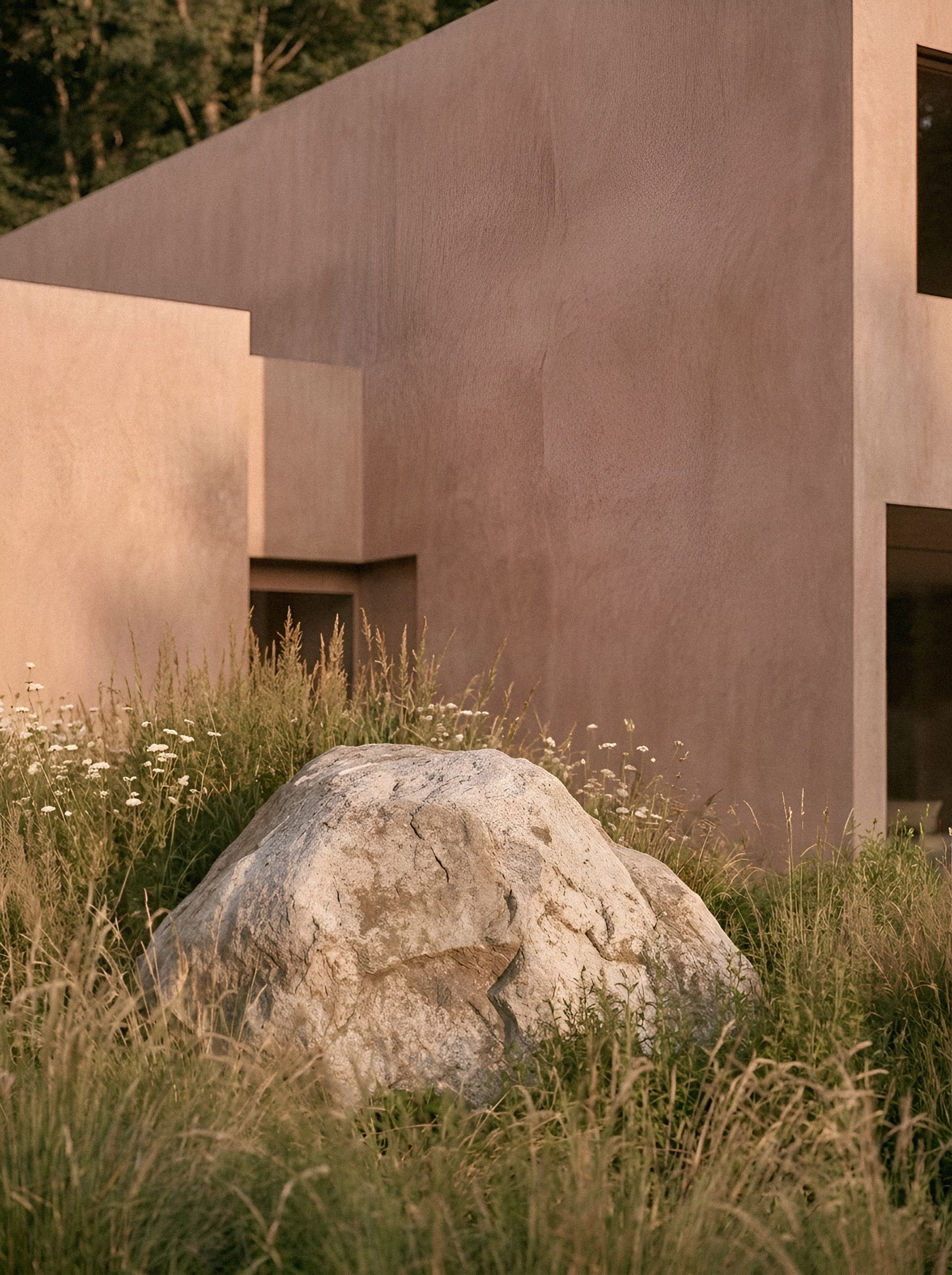
Edges and intervals along the same route.
A person coming around the wall finds another place to pause and begins making a different arrangement of the same garden.







Comments