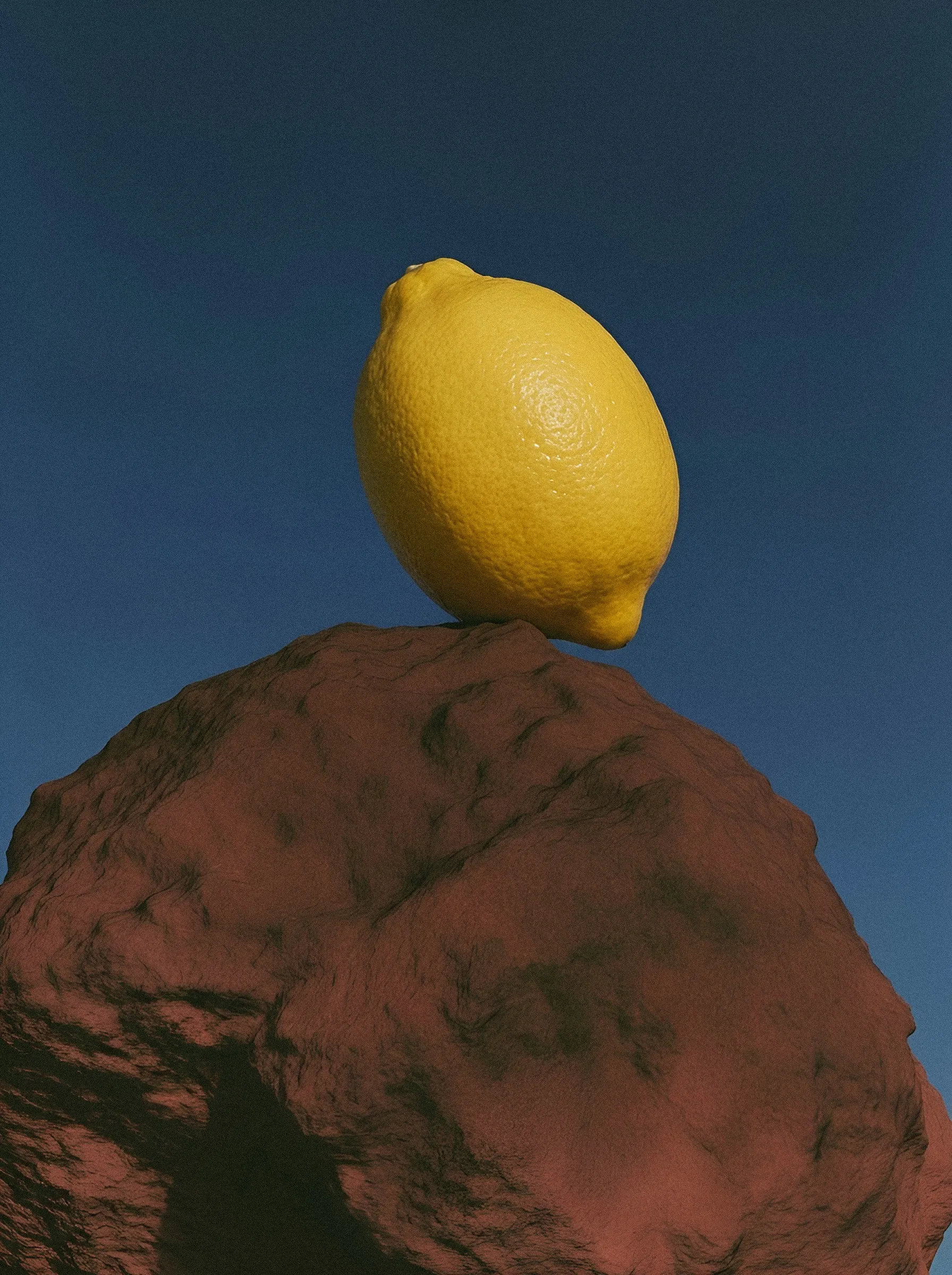
A lemon balances on a rough red stone. Against the dark blue background, its skin catches enough light to make the two surfaces feel close to touch. A still life holds these differences still long enough for looking to become a physical association.
Texture gives the eye a way to imagine contact. A broken edge suggests something different from a polished one; a thin film of light across a surface suggests another kind of resistance from a dry, uneven patch. The image cannot supply touch, but it can leave enough evidence for the body to make an association.
Getting closer is one way of making that evidence visible. A dimple in the peel acquires a shape, and a small variation in a surface becomes a change in height. Yet proximity can also remove the relationships that made the detail interesting. A texture shown without scale may become a pattern detached from the object that carries it.
Near enough to notice
Leaving the edge of a fruit or part of a supporting surface in the frame can restore that scale. The detail has somewhere to belong. A person looking can move between the thing itself and the marks that make it particular, rather than having to choose one kind of attention for the whole image.
Light makes another selection. Strong contrast can make a surface feel sharply described, while a softer edge leaves more of it uncertain. Neither treatment is automatically more intimate. The question is what the image allows somebody to notice, and whether the brightest part has earned the attention it receives.
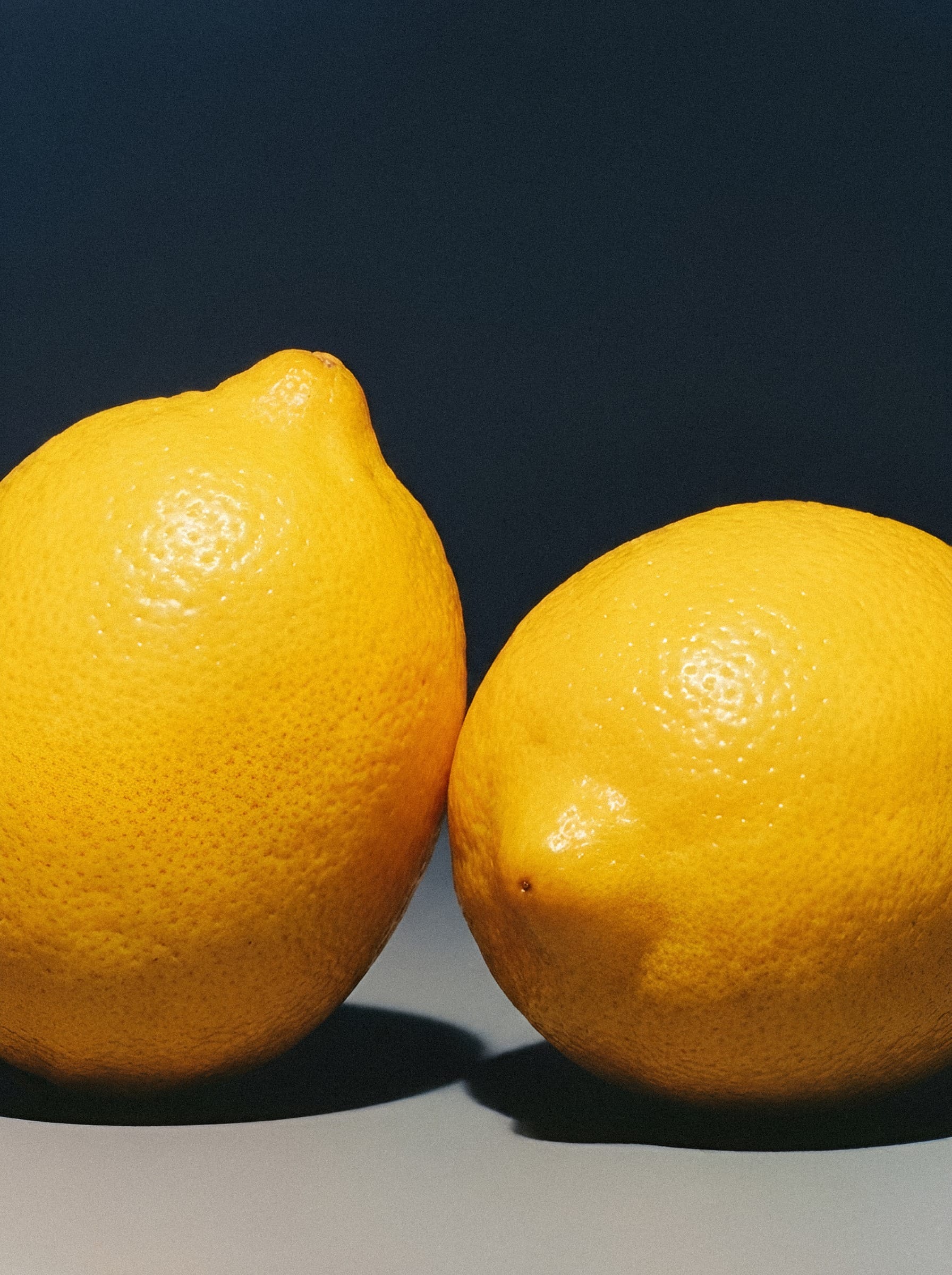
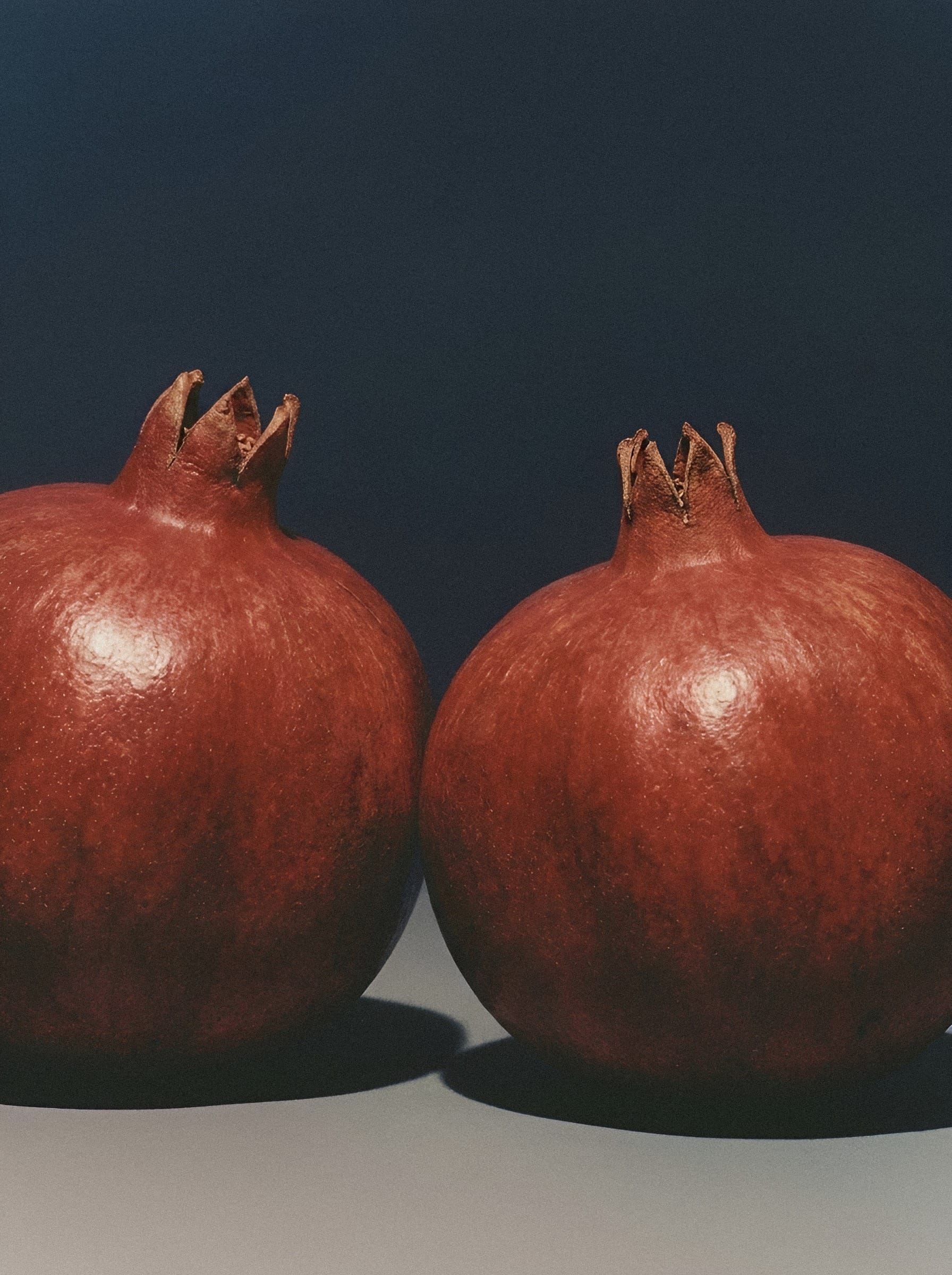
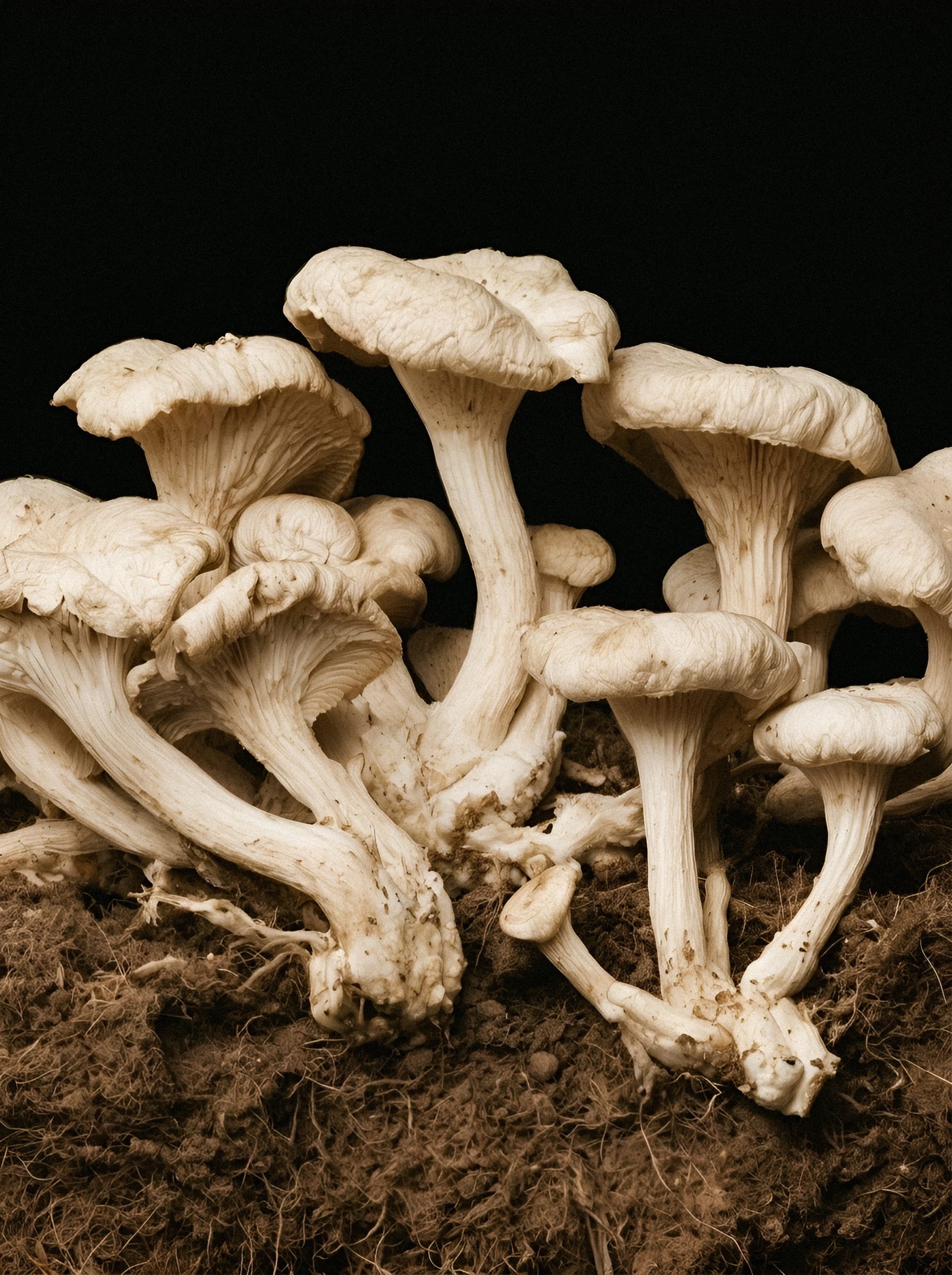
Different surfaces ask the eye to come closer.
A still life also offers a useful distance from immediate use. Food will not be eaten while the image is being viewed. The arrangement can hold a spill, a rough edge, or an interrupted action without needing to put it right. Looking is given a duration that the table itself may never have offered.
The part left unresolved
That distance does not make the physical world disappear. A stone has weight even when it is represented by a few changes of color. A surface seems cool or dry through associations brought by the viewer. The image becomes more particular when it leaves room for those associations instead of describing every part with the same insistence.
At the edge, something remains difficult to identify. It might be a fold, a reflection, or the point where one object gives way to another. The uncertainty is small enough to keep looking at, while the fruit beside it remains entirely familiar.



Comments