

A table can be almost empty and still be difficult to look at. A bright cable crosses its surface, a small object sits alone near the edge, and the light catches a mark that has nothing useful to do with either. Elsewhere, a shelf full of books may settle into a continuous field. The number of things does not explain the whole difference.
Attention responds to their relationships. Contrast separates one object from another; repetition allows several objects to be read together. An isolated color can draw the eye more strongly than a larger area of the same tone repeated nearby. Before deciding that a room contains too much, it helps to notice how many separate beginnings it presents to someone entering it.
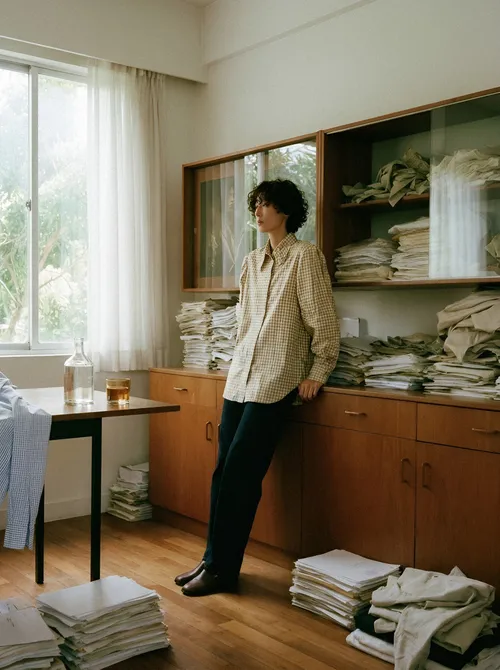
Grouping is one way of giving everyday activities a recognizable place. Books kept near the chair where they are read become a single, useful collection. Several small vessels on a tray occupy a surface differently from the same vessels spread evenly across it. There is a clear place to reach toward, and another place that remains available for something not yet brought into the room.

The things with a history
An object is rarely present for only a visual reason. A gift stays because of the person who gave it. An inherited bowl may matter more than its convenient place on a shelf. A tool left out can be a reminder that a task remains unfinished. An edit that treats all these things as interchangeable clutter will misunderstand why the room has become crowded, and may leave its owner reluctant to begin.
Giving a meaningful object more space can change its role without requiring a decision about whether it should be kept. Move one bowl away from the group and its surface becomes visible again. Put a familiar photograph near a place where somebody pauses, rather than among several images passed in a hurry. The object can return to active attention instead of remaining part of a collection nobody has looked at closely for months.
After making a few changes, the room needs time in use. A surface cleared for appearance may fill again because it is the only convenient place to put a bag. A container moved out of sight may become difficult to remember. These returns are useful information about what the room has been asked to do. An arrangement that survives only while nobody uses it has answered a narrower question than the household needed.
Living with the edit
Shared spaces make the test especially important. One person's restful surface may be another person's missing reference, and the preferred place for a reading lamp may obstruct a different task. The edit becomes more durable when those needs are made visible. A second tray, a reachable shelf, or a place to leave work together can resolve a problem that a stricter rule about tidiness would keep reproducing.

By evening, a glass has appeared on the table and a book has been left open. They occupy some of the space that was cleared, while the lamp and the chair remain easy to use. The arrangement has made room for this return. Tomorrow, the book can go back to its shelf, or stay where somebody is likely to reach for it again.






Comments